LinkedIn Lead Generation for Small Businesses: From Posts to Pipeline
A practical guide to LinkedIn lead generation for small businesses: turn post engagement into real conversations with lead forms and follow-up.

Your posts get reactions. People comment, a few share, maybe someone sends a thumbs-up emoji in the comments. And then nothing happens. No message, no form fill, no way to know who was actually interested enough to buy. This is the most common complaint from founders and consultants who post on LinkedIn regularly: the engagement is real, but it never turns into a pipeline you can work.
The problem usually isn't the content. It's that there's no path from "I liked this post" to "I'm now in your system as a lead." LinkedIn lead generation for small businesses works best when it's treated as a chain with three links: content that earns attention, a low-friction way to capture interest, and a follow-up process that doesn't let captured leads go cold. Most small businesses only have the first link built.
This article walks through how to build the other two, and how to keep the whole chain running without it becoming a second job.
Why reactions don't equal leads
A like costs nothing. A comment costs a few seconds. Neither requires the person to identify themselves as someone with a real problem or budget. They're useful signals — they tell you the content resonated — but they're not leads.
A lead is someone who has given you a way to contact them and a reason to expect that contact. That distinction matters because it changes what you should actually be measuring. If you're tracking reactions and impressions as your success metric, you're optimizing for the wrong outcome. The goal of a LinkedIn post, from a lead generation standpoint, is to get someone to take one small additional step: click through, fill a form, or send a message.
The missing middle step
Most small business LinkedIn strategies look like this: post content, hope someone DMs you. That skips the step in between — giving the interested reader an obvious, easy next action. Without it, you're relying entirely on the small percentage of people motivated enough to initiate contact themselves. Everyone else just scrolls on.
Build content that invites a next step
Not every post needs a call to action, but your lead-generation posts should make it obvious what to do next. A few patterns that work well on LinkedIn specifically:
- Problem-first posts. Name a specific problem your audience has, describe why common fixes fall short, and end with an invitation to discuss their situation.
- Point-of-view posts. Take a clear stance on something in your industry. These generate comments from people who disagree or want to add nuance — both are openings to continue the conversation privately.
- Behind-the-scenes posts. Show how you actually do the work. This builds the kind of trust that makes someone comfortable handing over their contact details later.
- Direct offer posts. Occasionally, just say what you do and who it's for, with a clear way to get in touch. These feel less "clever" but they convert the people who were already close to ready.
The common thread: each post type gives the reader a reason to act, not just a reason to nod along.
Capture the interest before it disappears
Once someone is ready to act, don't make them hunt for a way to do it. This is where most small business LinkedIn efforts leak leads — someone is interested, but the only option is "comment below" or "send me a message," which is a much higher-friction ask than a short form.
Lead forms vs. DMs vs. comments
Each capture method has a different friction level and a different data outcome:
- Comments are public, easy, but give you almost no usable contact information.
- Direct messages are private and give you a name, but the conversation lives inside LinkedIn's inbox, which is easy to lose track of once volume increases.
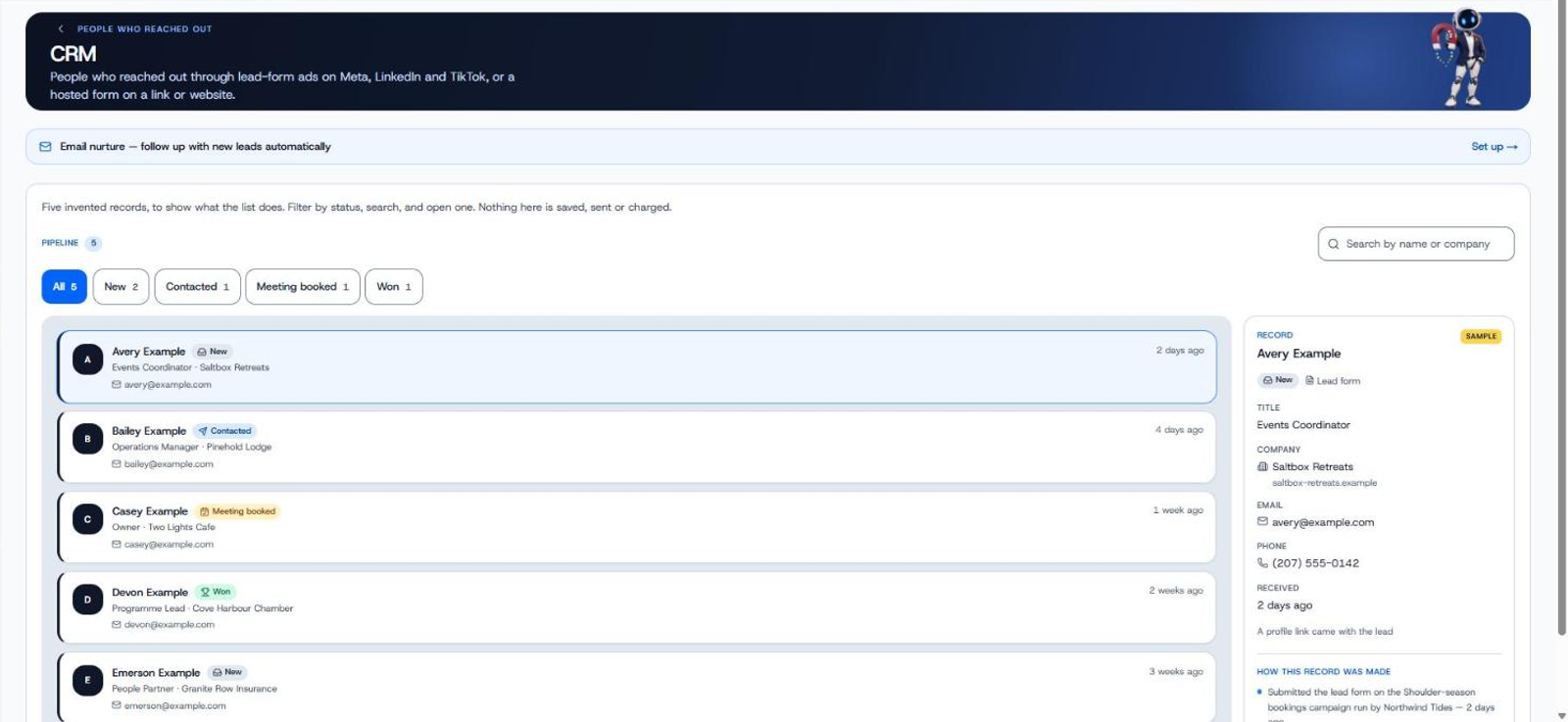
- Lead forms sit between the two — low friction for the reader, but they land contact details somewhere you can actually track, sort and follow up from.
If you're serious about LinkedIn lead generation for small businesses, a lead form linked from your posts and profile is worth setting up before you worry about anything more advanced. PostFuse's LinkedIn lead capture feeds form submissions straight into a built-in lead list, so the people who raise their hand on a post don't end up scattered across inbox threads and comment notifications.
Where to put the form
A lead form only works if people find it at the right moment:
- Linked in the first comment on relevant posts (keeps the post itself clean)
- Pinned to your profile featured section
- Referenced directly in posts that make a specific offer
- Added to your LinkedIn company page call-to-action button
Don't let captured leads go cold
Capturing a lead is only half the job. A form submission that sits untouched for a week is barely better than a comment you never replied to. Small businesses often lose leads not because they didn't generate them, but because nobody owned the follow-up.
A workable follow-up process doesn't need to be elaborate:
- Acknowledge quickly. A short reply within a day or two, even just confirming receipt, keeps the lead warm.
- Qualify with one or two questions. Find out enough to know if this is a fit before booking a full call.
- Give a clear next step. A calendar link, a short questionnaire, or a direct answer to their question — whatever matches how they came in.
- Keep leads in one place. Scattered leads across DMs, comments and email get missed. A single list you can review weekly is enough for most small operations.
The point isn't to automate away the personal touch that makes LinkedIn work in the first place — it's to make sure interested people don't fall through the cracks between channels.
Pairing organic posts with paid reach
Organic LinkedIn posts are limited by who happens to be scrolling when you publish. For small businesses that want more consistent lead flow, pairing organic content with a modest, targeted ad budget extends reach to people outside your existing network who match your ideal customer profile.
This doesn't require a large budget or a dedicated ads team. A single post that performed well organically is often a good candidate to boost to a specific audience, since you already know the content resonates. PostFuse's ads automation lets you manage LinkedIn ad campaigns alongside Meta and Google campaigns from one place, with approvals built in so budget changes don't go out without a sign-off.
Keep the content engine running without burning out
Lead generation on LinkedIn is a consistency game more than a creativity game. The founders who get the most out of it aren't the ones with the single viral post — they're the ones who show up reliably with content that has a clear next step attached.
That consistency is also where most people fall off. Writing, scheduling, and keeping track of lead forms across multiple posts a week is a real time commitment on top of running the business. This is where having the planning, writing, scheduling, image creation and lead capture pieces working together — rather than as five separate tools — makes the difference between a system you maintain and one you abandon after a month.
PostFuse plans, writes and schedules posts across LinkedIn and other channels, creates on-brand visuals from your brand kit, and routes lead form submissions into one list — all with owner review before anything goes live.
Frequently asked questions
How often should a small business post on LinkedIn to generate leads?
Consistency matters more than frequency. A steady cadence of a few well-targeted posts a week, each with a clear next step, tends to outperform sporadic bursts of daily posting followed by silence.
Do I need a large following to generate leads on LinkedIn?
No. A smaller, relevant audience that includes your actual target customers will generate more usable leads than a large but unfocused following. Targeted reach, including modest ad spend, can supplement a smaller organic audience.
Should I use LinkedIn's native lead forms or a separate landing page?
Both work. Native lead forms reduce friction since the reader never leaves LinkedIn, which often improves completion rates. A separate landing page can give you more control over design and follow-up messaging, but adds an extra click.
What's the fastest way to lose a LinkedIn lead after capturing it?
Letting it sit without acknowledgment. Leads cool quickly once the context of your post fades from their memory, so a prompt, even brief, response matters more than a perfectly crafted one.
Can I run LinkedIn lead generation without paid ads?
Yes. Organic posts with a clear call to action and an easy capture method can generate leads on their own. Paid reach is an optional way to extend that beyond your existing network once you know which content converts.
Try PostFuse for your LinkedIn lead generation
If you're ready to turn LinkedIn posts into a lead list you can actually follow up with, PostFuse handles the planning, writing, scheduling and lead capture in one place, with your review before anything publishes.